The following is a select bibliography of works on, or directly relevant to, the Griesbach hypothesis. If you are working, or have worked, in this area please be in touch via the Contact page so I can link to your work.
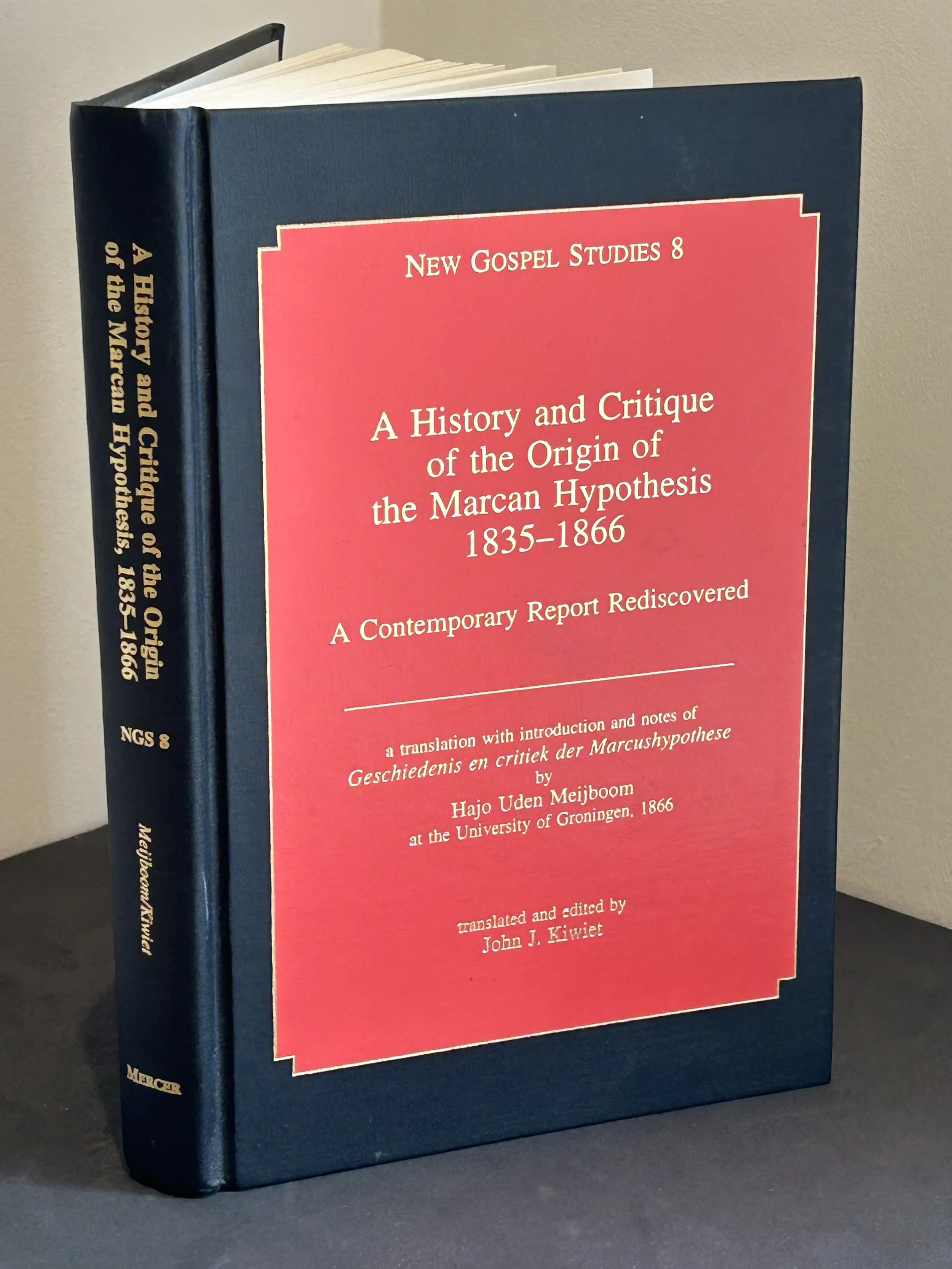
David Alan Black, Why Four Gospels: The Historical Origins of the Gospels, Gonzales, FL: Energion Publications, Second Edition 2010 (first published 2001).
Black’s book is written for an audience of pastors an lay people rather than biblical scholars. He advocates very early dates for all the synoptic gospels (all before the destruction of the temple in 70 C.E). Not everyone will be convinced by his reconstruction of the precise circumstances in which each of the synoptics were written. Even so, his summary of the evidence from the patristic sources is useful and contrasts with the relative neglect of that evidence by many scholars.
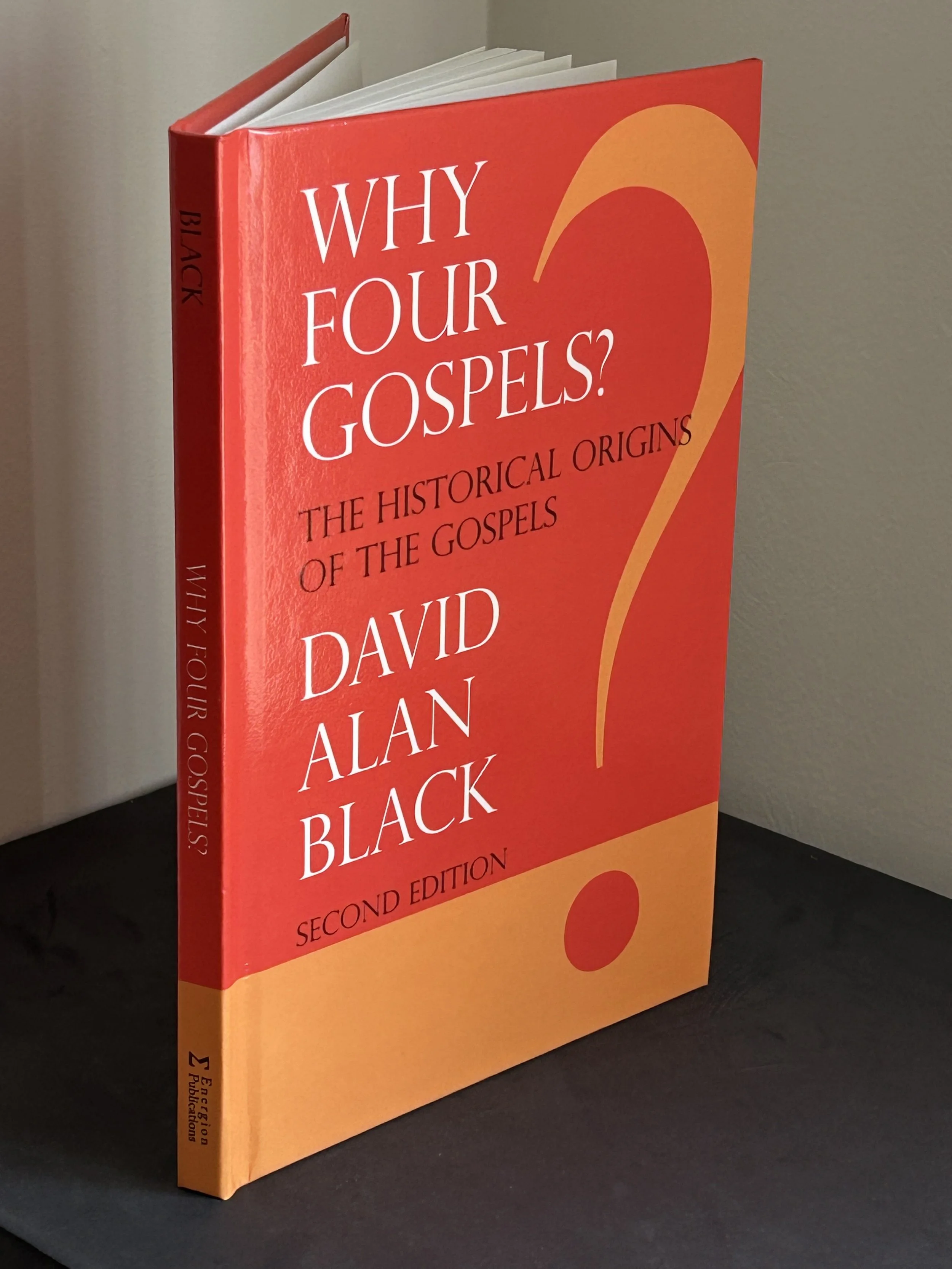
David Laird Dungan, A History of the Synoptic Problem: The Canon, the Text, the Composition, and the Interpretation of the Gospels, New York: Doubleday, 1999.
Dungan was a member of the American group of neo-Griesbachians. His monograph on the history of the synoptic problem deserves mention in its own right. It is recognised as one of the best studies in this area, even by those not persuaded by the Griesbach hypothesis.
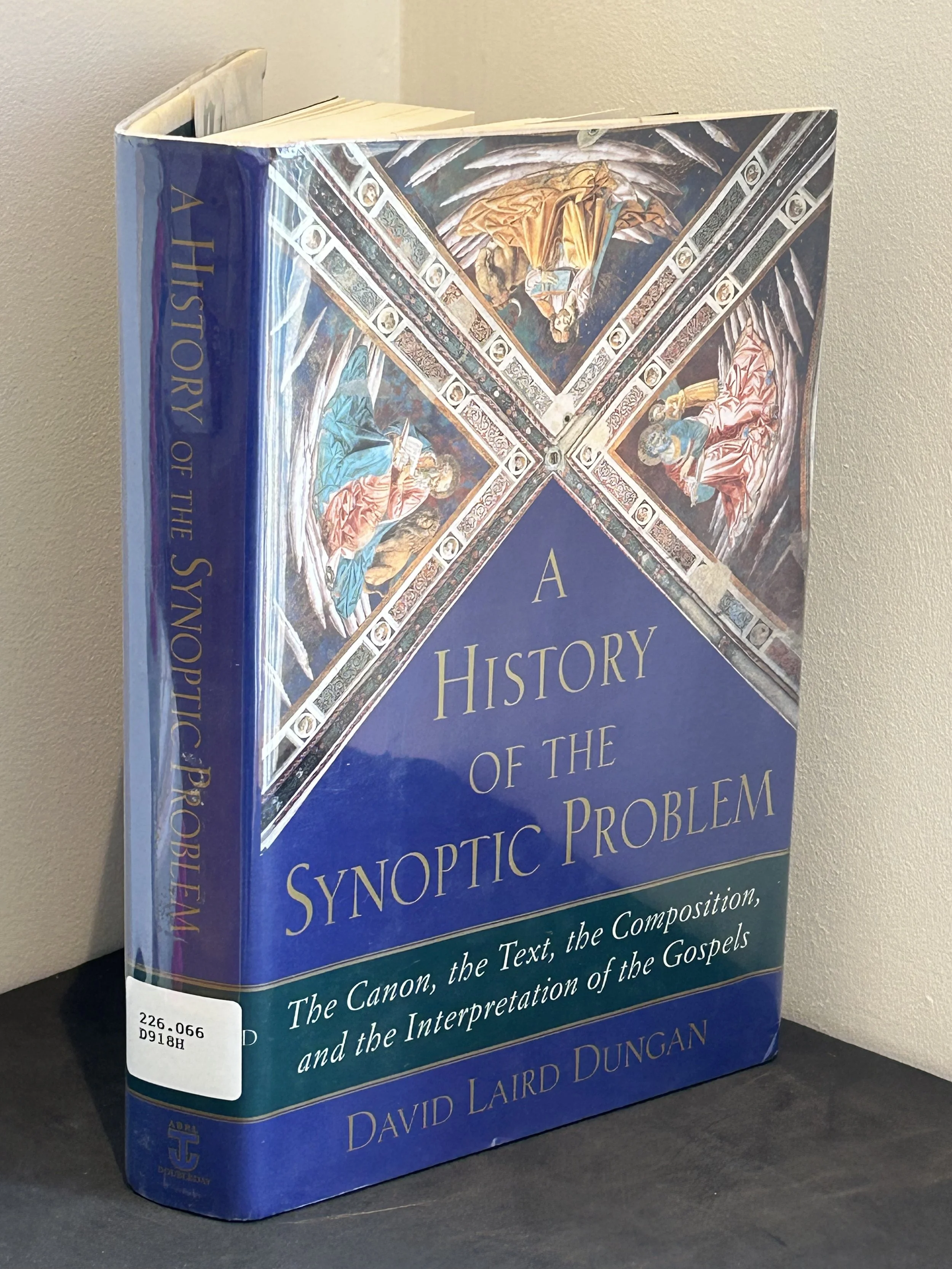
Farmer, William R., The Synoptic Problem: A Critical Analysis, New York, London: Macmillan, 1964.
Farmer’s seminal work that gave rise to the mid to late 20th Century revival of the Griesbach hypothesis, especially in the USA.
Thomas R.W. Longstaff, Evidence of Conflation in Mark? A Study in the Synoptic Problem, Society of Biblical Literature Dissertation Series 28, Missoula, MT: Scholars Press, 1977.
The published version of Longstaff’s doctoral thesis, which argues that certain passages in Mark represent conflations of the relevant pericopes in Matthew and Luke and hence evidence for the posteriority of Mark.
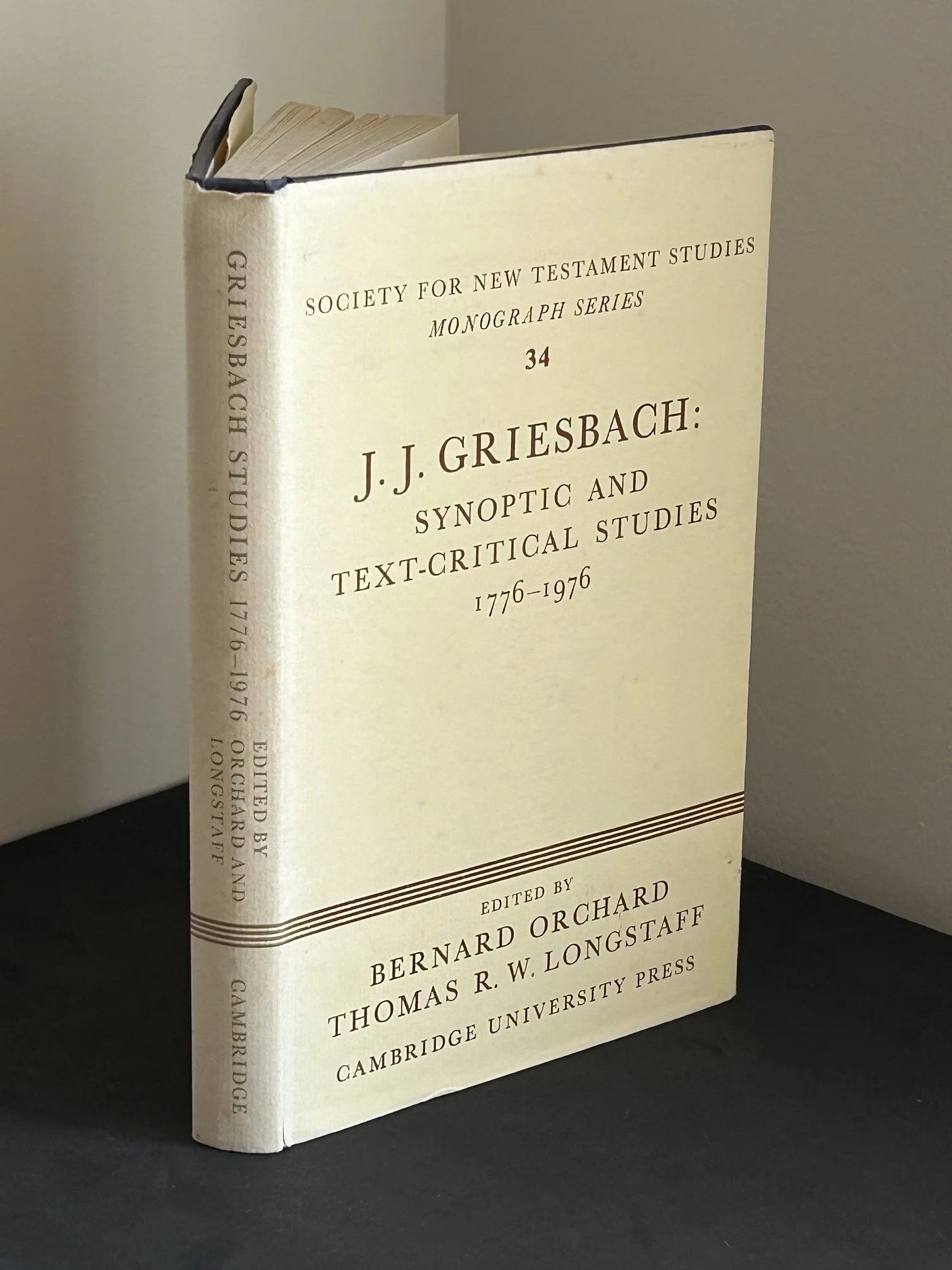
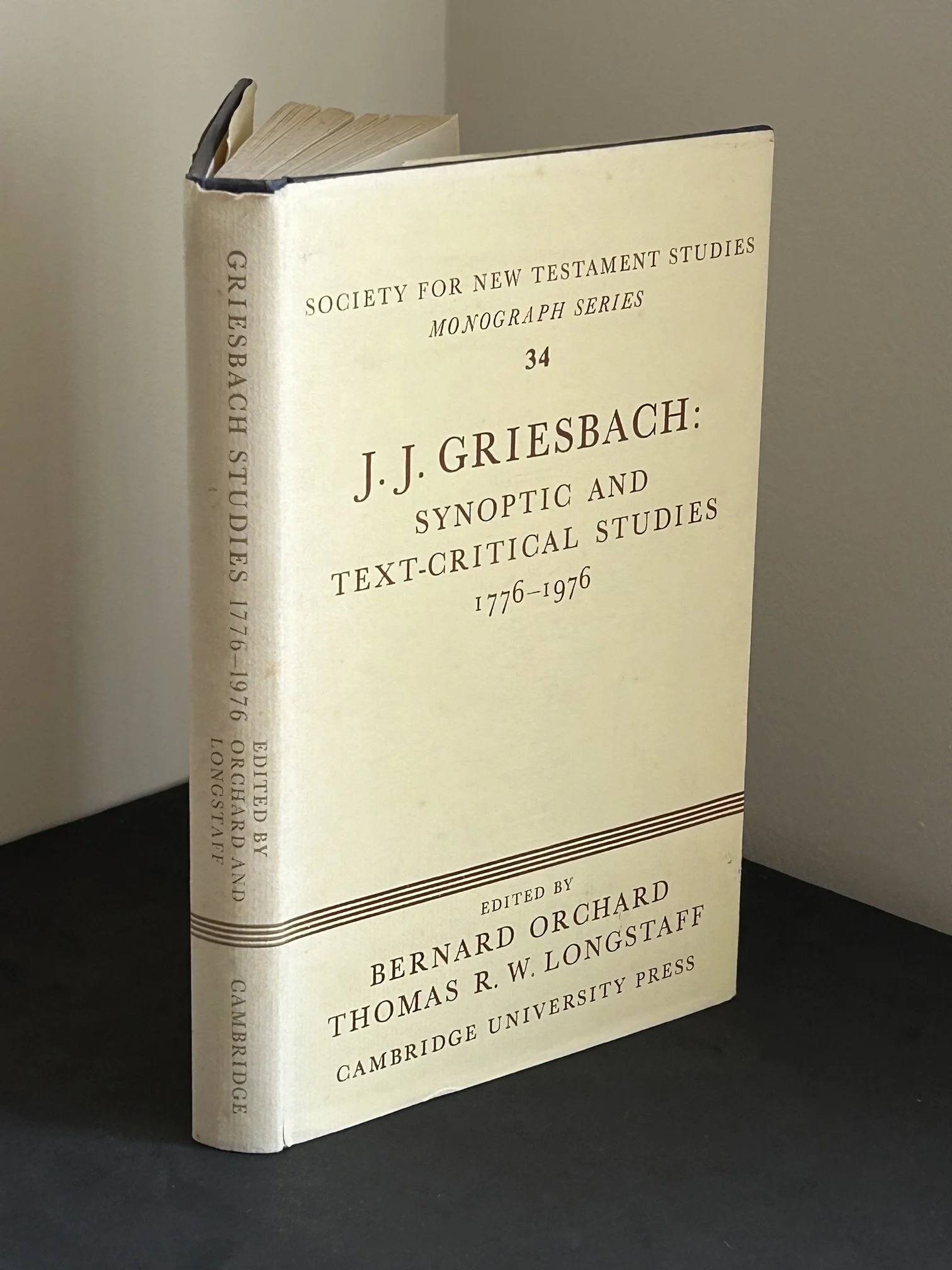
Bernard Orchard and Thomas R.W. Longstaff, eds, J.J. Griesbach: Synoptic and Text-Critical Studies 1776–1976, Cambridge: Cambridge University Press, 1979.
This volume arose from a conference celebrating the 200th anniversary of the publication of J.J. Griesbach’s groundbreaking synopsis of the gospels. The volume includes Orchard’s translation of Griesbach’s proposed solution to the synoptic problem under the title, ‘A Demonstration that Mark Was Written After Matthew and Luke’ (pp. 103-135).
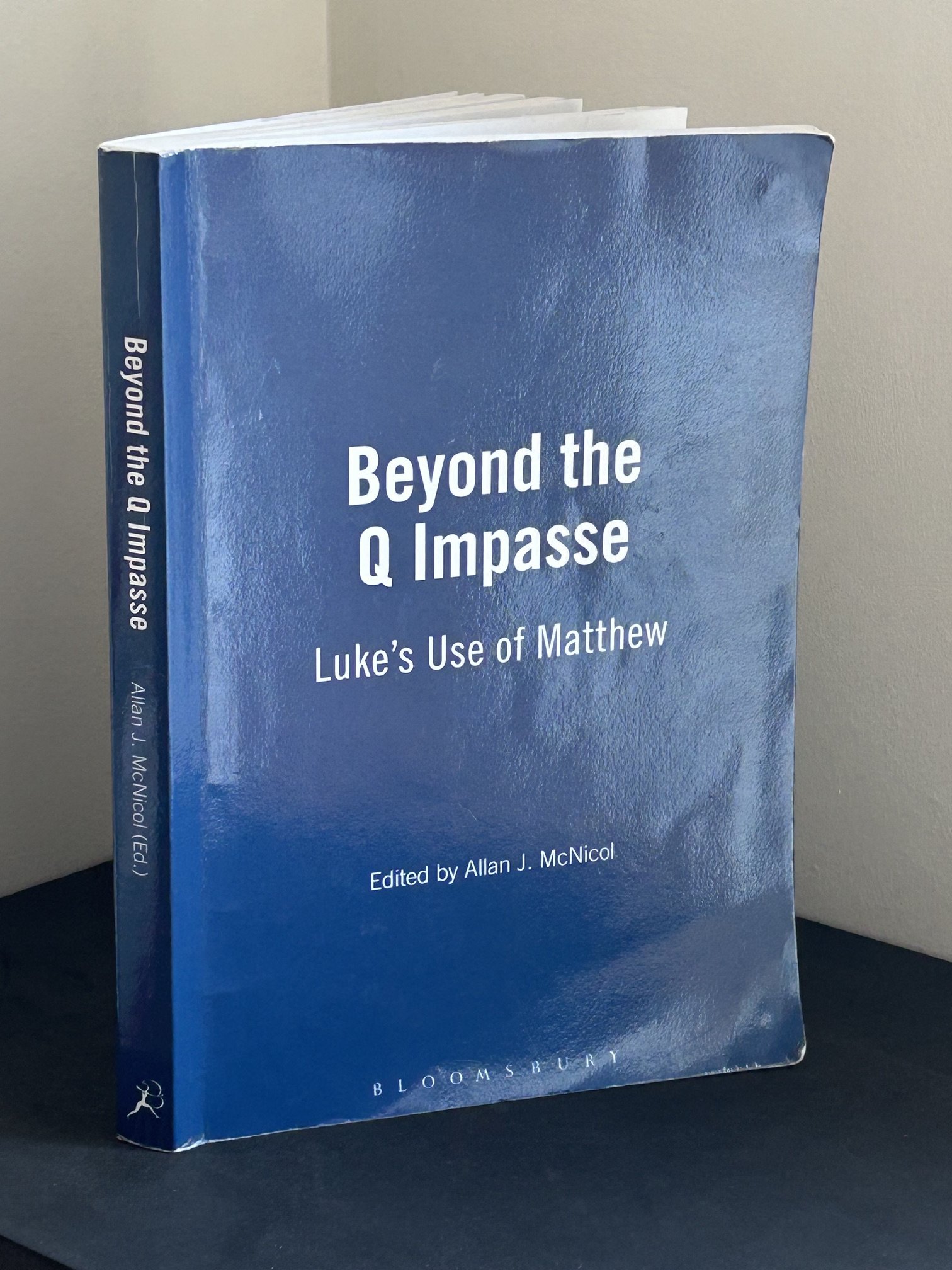
McNicol, Allan J. with David L. Dungan and David B. Peabody (eds.), Beyond the Q Impasse: Luke’s Use of Matthew (Valley Forge, Pennsylvania, Trinity Press International, 1996).
This volume was one of the key outputs of the Institute for Gospel Studies group that built on William Farmer’s work. The volume provides a verse by verse analysis of Luke’s use of Matthew, according to the Griesbach hypothesis. The volume also reported the observation of what I call Luke’s reorganisation of Matthew’s order by a process of “iterative gleaning” (see video on New Evidence page).
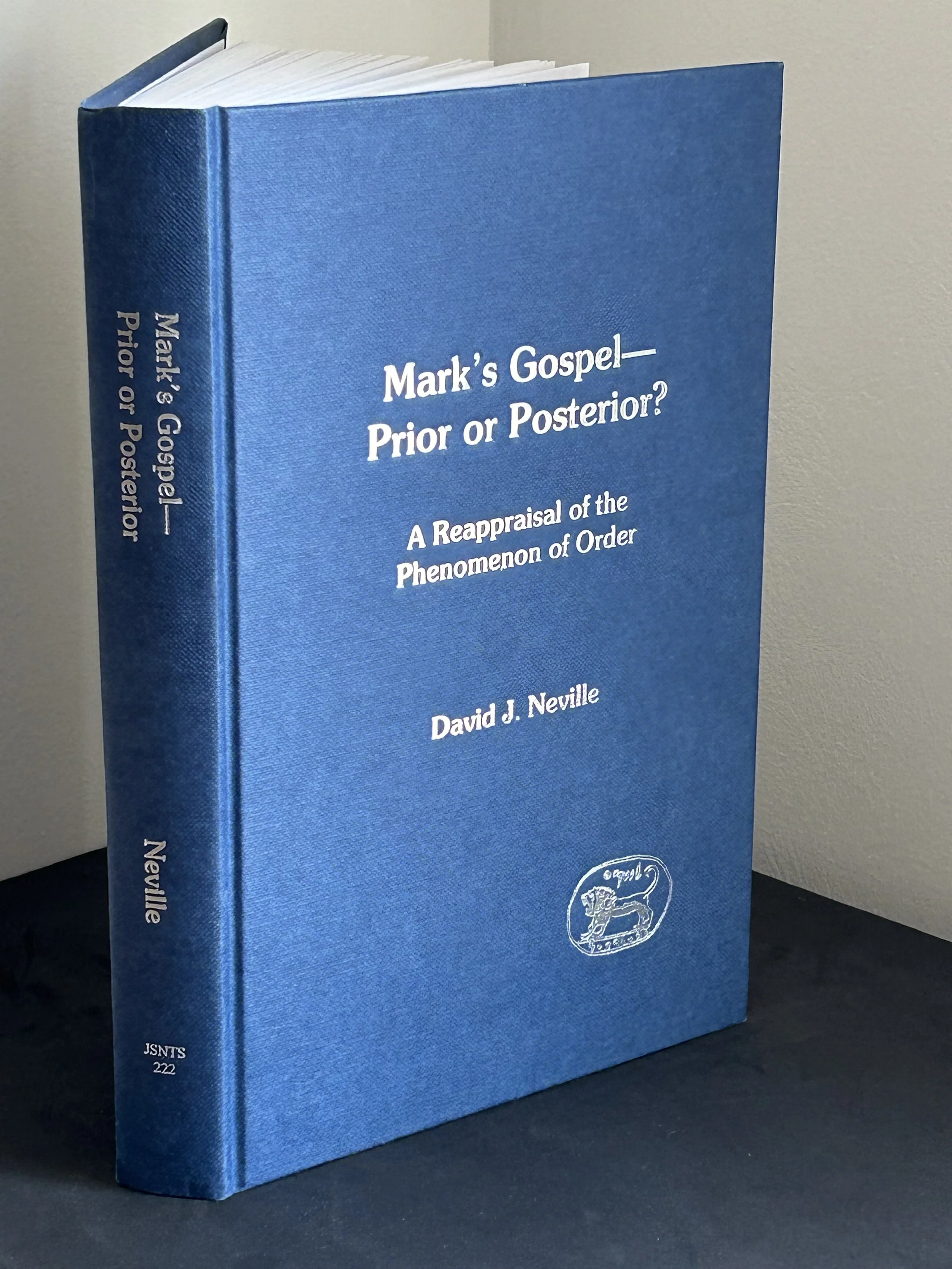
Neville, David J., Mark’s Gospel – Prior or Posterior: A Re-appraisal of the Phenomenon of Order (Sheffield: Sheffield Academic Press, 2002).
Neville provides a comprehensive analysis of existing arguments from order and concludes that such arguments cannot be the basis of valid inferences about the relationships between the synoptic gospels, either in practice or in principle. My work challenges that conclusion.
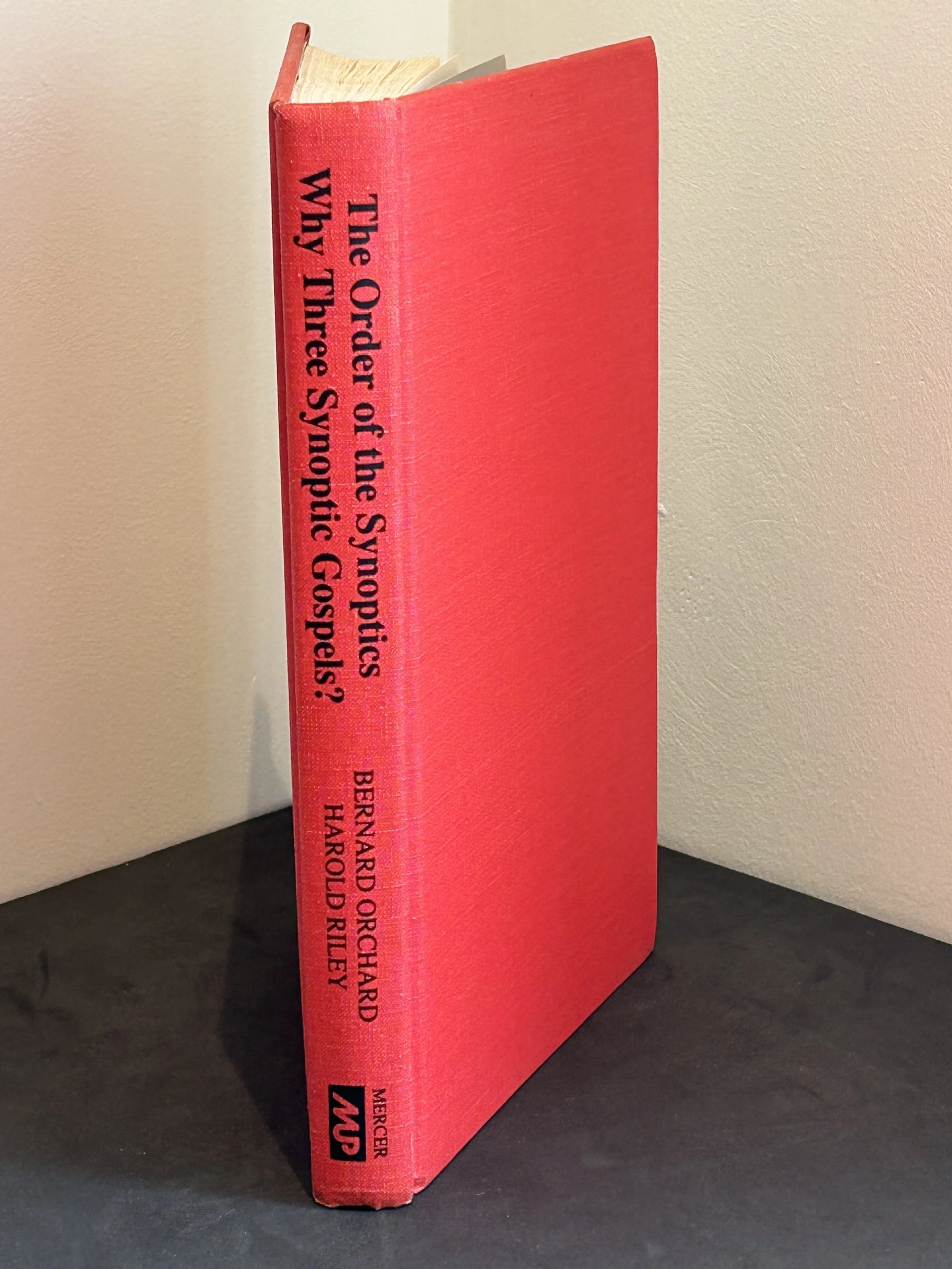
Bernard Orchard and Harold Riley, The Order of the Synoptics: Why Three Synoptic Gospels?, Macon, GA: Mercer University Press, 1987.
Bernard Orchard (1910-2006) was a Benedictine monk at Ealing Abbey, London (a stone’s throw from where I grew up). He was a long standing collaborator with William Farmer’s group of neo-Griesbachian scholars and published a number of contributions to the study of the Griesbach hypothesis, including The Order of the Synoptics, co-authored with Harold Riley, an Anglican Priest.
Peabody, David Barrett, Mark as Composer (Macon, GA; Mercer University Press, 1987).
Peabody was a core member of the American neo-Griesbachian group that gathered around William Farmer. Peabody’s study seeks to identify linguistic features that are especially or uniquely characteristic of Mark. While the study itself does not presuppose any particular source theory, on the Griesbach hypothesis these features would represent Markan overlay on the material he derived from Matthew and Luke.
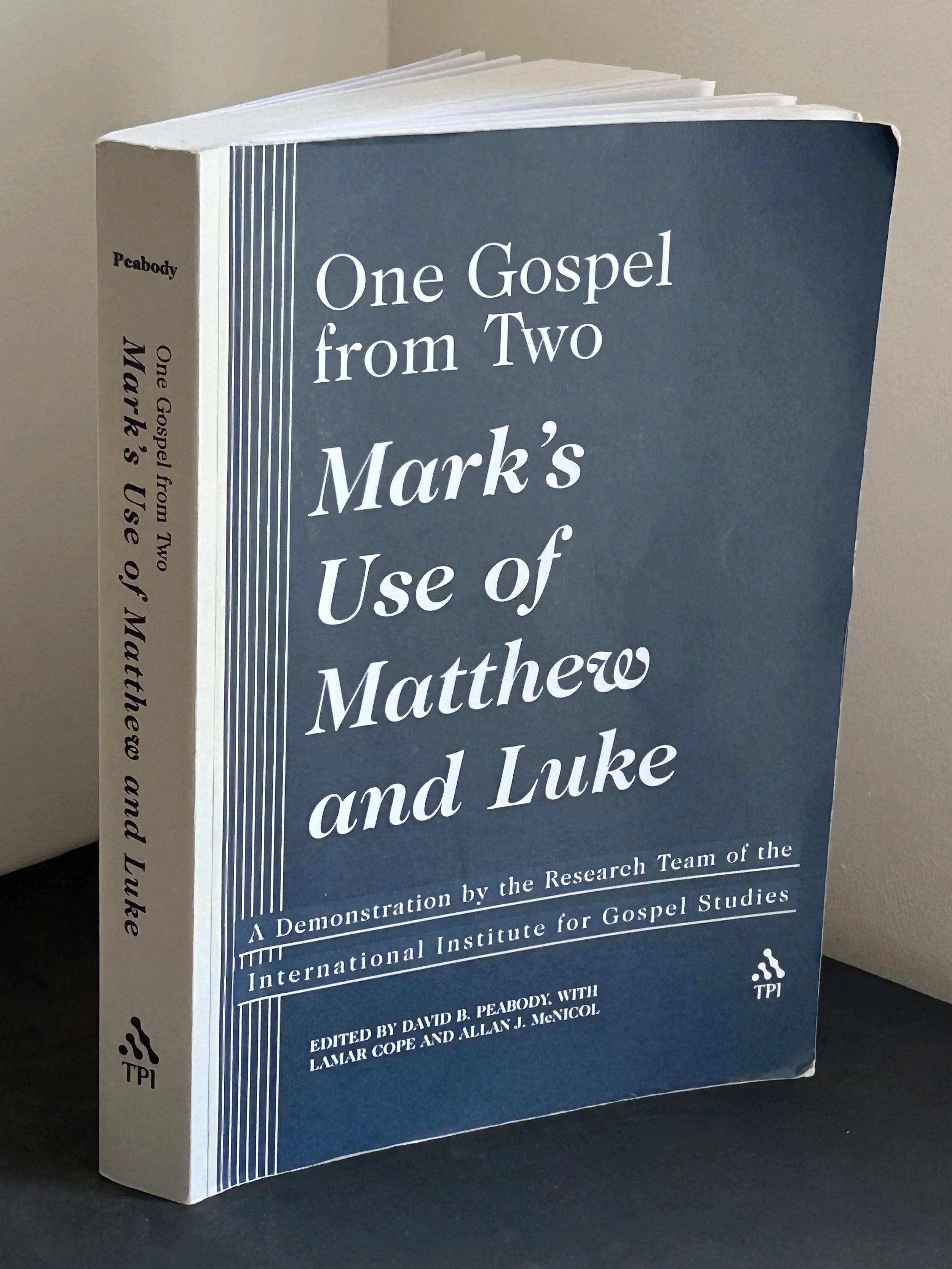
Peabody, David B. with Lamar Cope and Allan McNicol, One Gospel from Two: Mark’s use of Matthew and Luke, Harrisburg, London, New York, Trinity Press International, 2002.
This volume is one of the key outputs from the work of the American neo-Griebachians, demonstrating at a verse by verse level how, on the basis of the Griesbach hypothesis, Mark has combined the texts of Matthew and Luke.
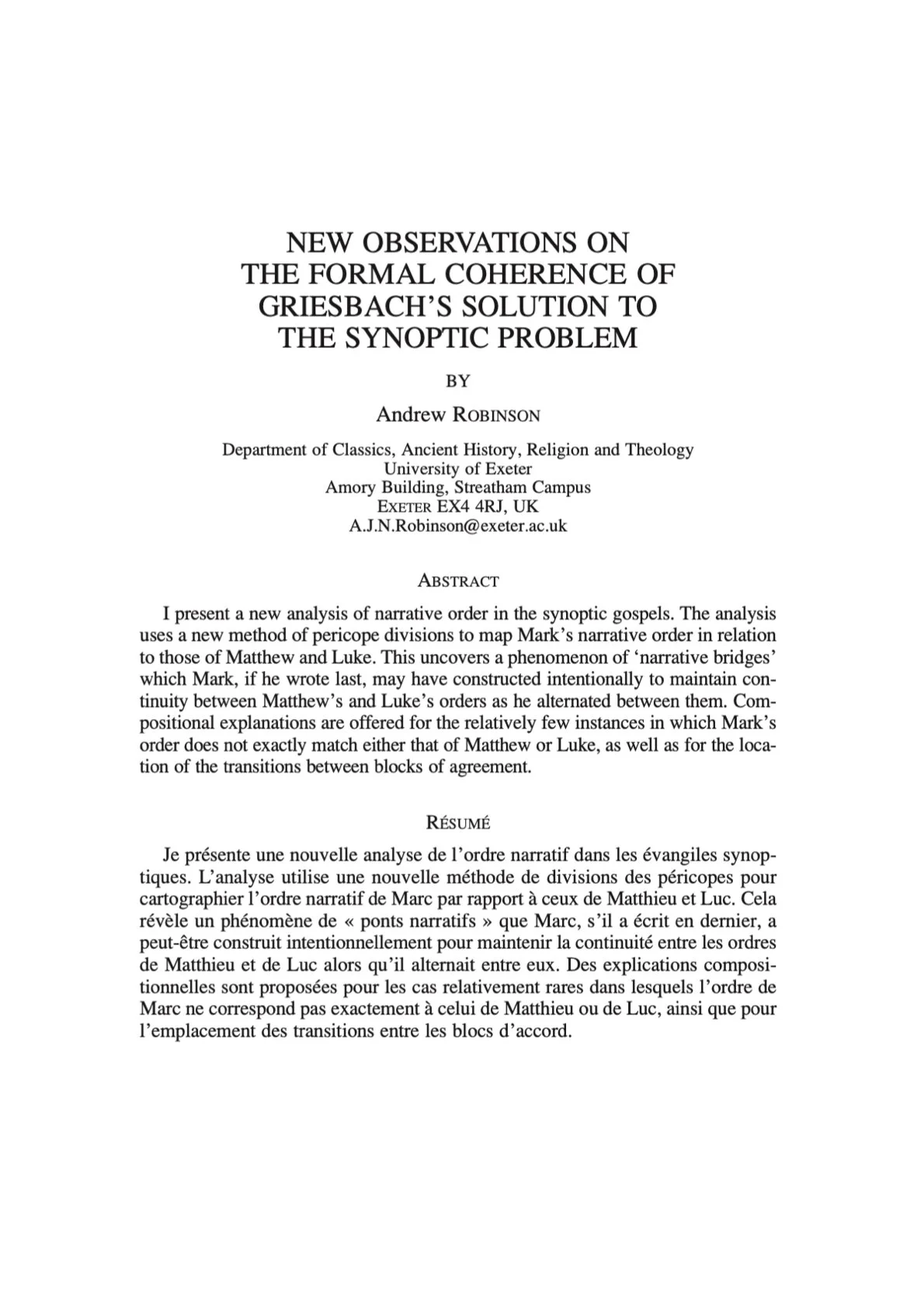
Robinson, Andrew, ‘New Observations on the Formal Coherence of Griesbach’s Solution to the Synoptic Problem,’ Revue Biblique 132 (2025), pp. 29–45.
In this article I apply the new formal analysis of narrative order to Mark’s relation to Matthew and Luke. The new analysis demonstrates the internal coherence of the hypothesis of Markan posteriority at a formal level. I also draw attention to the phenomenon of possible narrative bridges in Mark.
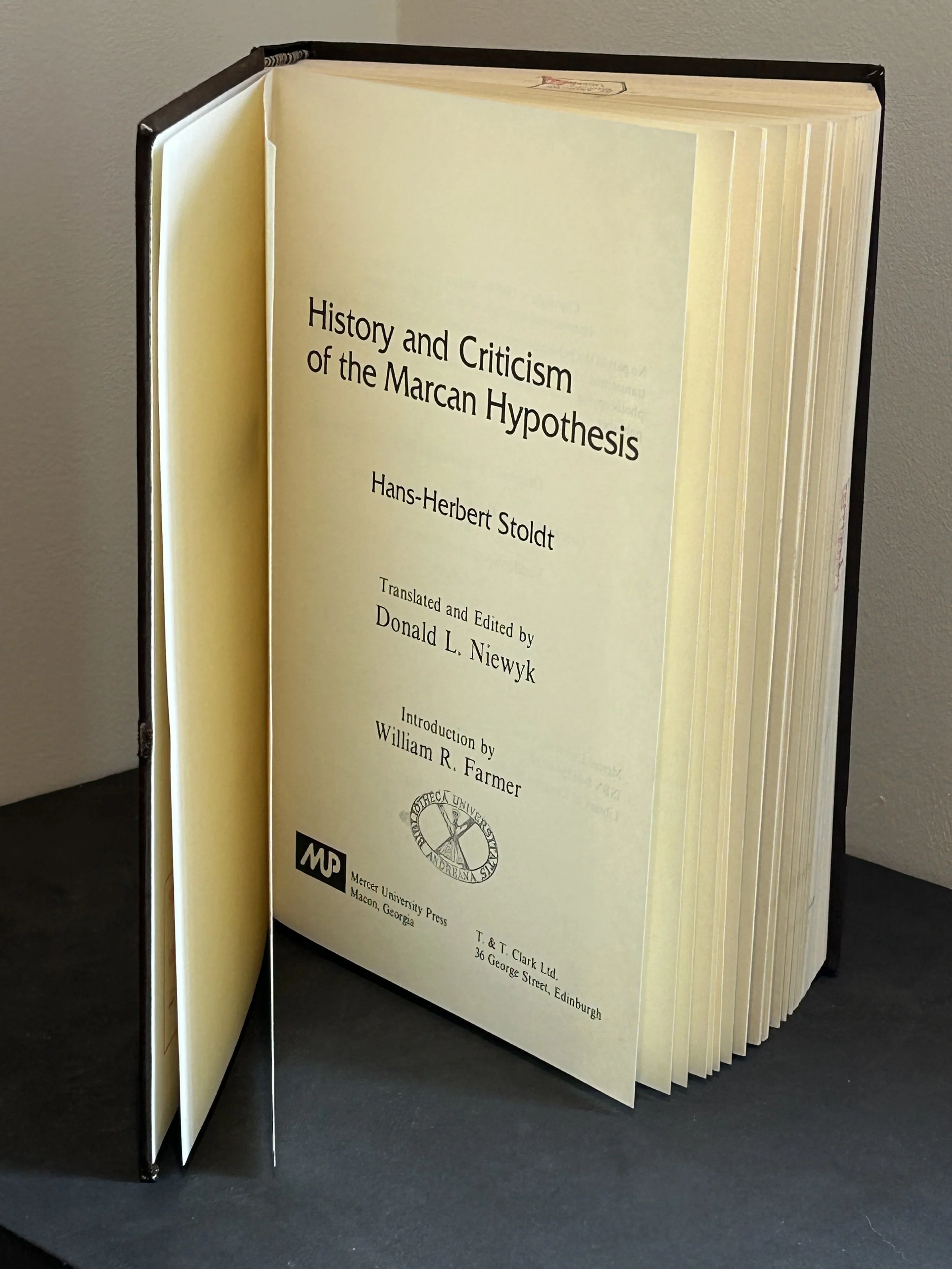
Hans-Herbert Stoldt, History and Criticism of the Marcan Hypothesis, translated and edited by Donald L. Niewyk, Macon, GA: Mercer University Press, 1980.
Stoldt was a retired school administrator whose book (published in German, 1977) came to the attention of William Farmer, who wrote the Introduction to the English translation. The book suffers from a somewhat polemical tone, but nevertheless provides an important critique of the development and influence of the hypothesis of Markan priority with a focus on the German literature.
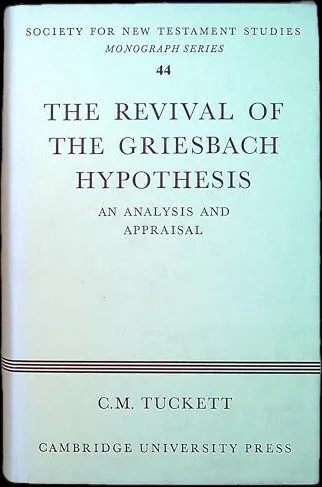
Tuckett, Christopher M., The Revival of the Griesbach Hypothesis, Cambridge: Cambridge University Press, 1983.
In this volume Christopher Tuckett provides a critical analysis of the 20th Century revival of the Griesbach hypothesis initiated by William Farmer’s work.
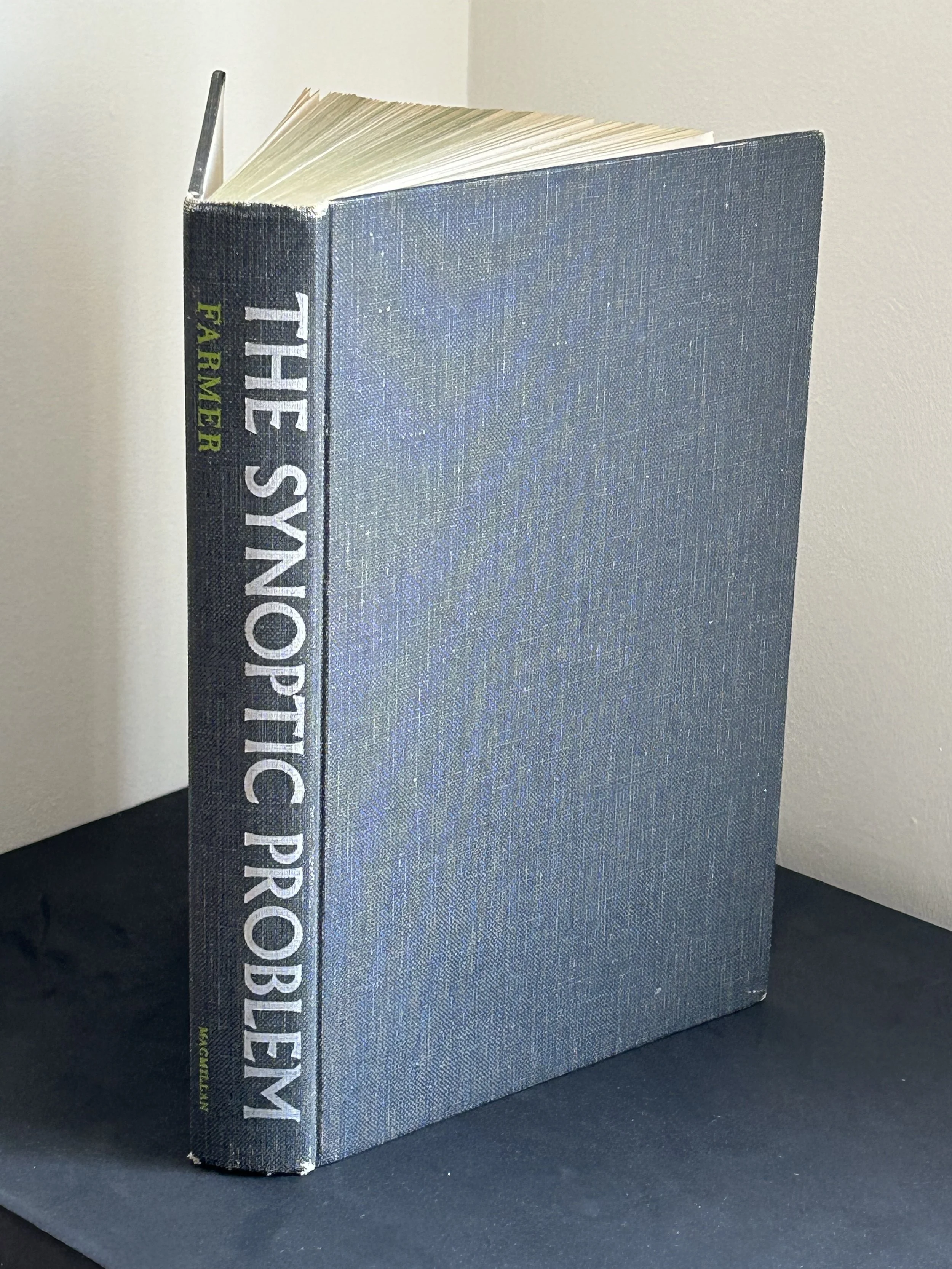
Meijboom, Hajo Uden, A History and Critique of the Marcan Hypothesis 1835–1866: A Contemporary Report Rediscovered, translated and edited by John J Kiwiet, Macon, GA: Mercer University Press, 1993.
Jan (John) Kiwiet (1925-2006) was Professor of Historical Theology at Southwestern Baptist Theological Seminary, Fort Worth, Texas. His contribution to Griesbach scholarship was his translation (with William Farmer’s encouragement) of H.U. Meijboom’s 1866 doctoral thesis on the origins of the hypothesis of Markan priority. The book provides a snapshot of scepticism about the “Marcan Hypothesis” at the time that the hypothesis had just become established in Germany.